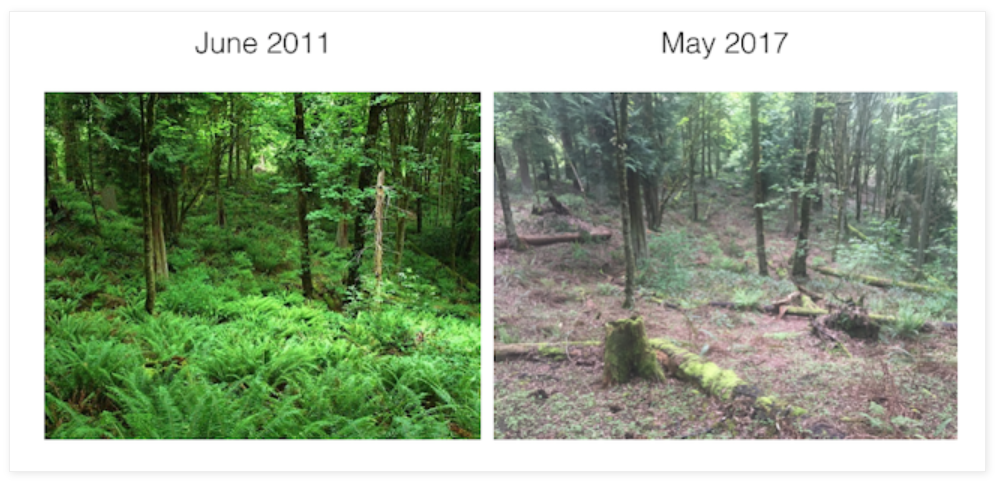
A video introduction: one of the last large pure stands of sword ferns at Seward Park.
Four plants died in 2020.
Death moves upslope year by year.
Cause unknown.
Ongoing, summer 2025.
The Sword Ferns near the hatchery and along the northern end of the hidden trail above that area began to fail about a year ago, though the first signs were quite subtle - just a sense that they were somehow sagging, as if they'd been covered with cardboard for a week or two. At the time I estimated that perhaps 40% of the population was affected.
I kept watch over the winter, thinking that what I was seeing was a temporary thing, that the ferns would recover when their fiddleheads appeared in spring. That was not to be. None of the affected ferns produced fiddleheads this spring, and by late spring the remaining fronds withered and died.
By July I noticed that whatever was happening had spread beyond the initial 40%, though it could be that I just hadn't seen the first signs of failure in the seemingly unaffected population. I monitored spore production in and around the affected areas this year, and noticed that many of the apparently healthy individuals either failed to produce sori, or that their sori were sparse and underdeveloped. Many of these individuals failed over the summer.
I haven't a clue as to the cause, though I have been thinking about it. Initially I looked for signs of Aplodontia (mountain beaver) activity, thinking that a new and active colony might be destroying the fern roots. I found none of the signs I would expect from such activity - no burrows, no bitten off fronds - so think that Aplodontia is in the clear, at least this time.
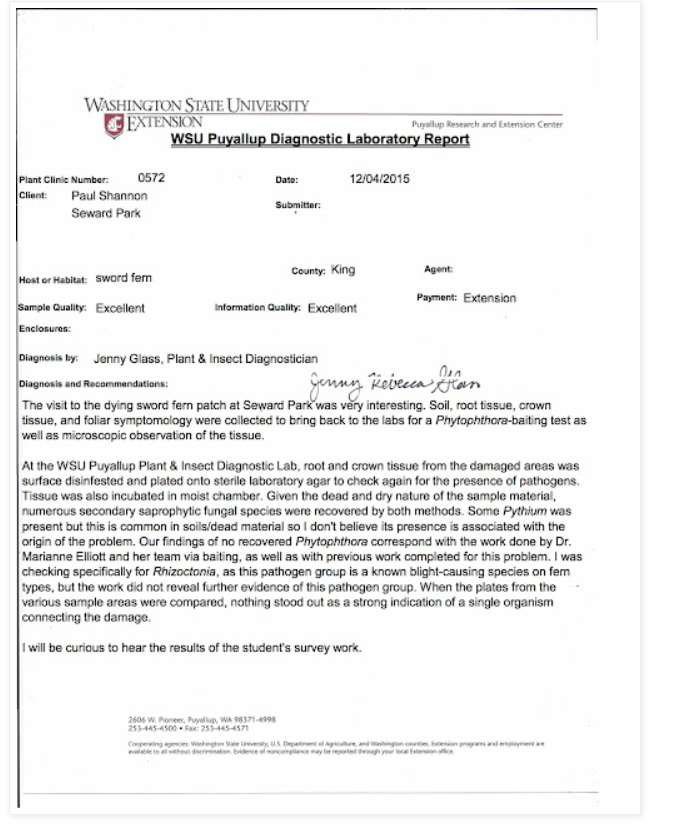
Microscopic observations and incubation of the sample in moist chamber have not revealed any evidence of a primary pathogen in the root zone or crown tissue at the soil line. A composite sample of tissue from these areas tested for the Phytophthora pathogen via an Agdia immunostrip test kit was negative for the presence of this disease group (nor do soil conditions seem to be poorly draining, conditions that promote the growth of Phytophthoras). Microscopic investigation of the fronds of the sword fern also have not shown any primary pathogenic activity that would be responsible for the occurrence of this dying patch of plants.
His report:
I examined the fern samples you brought over. I found a little Rhizoctonia and Pythium in the roots. Both can cause root rot problems in ferns. However, I am not convinced that this is the cause of the problem since both are present in low amounts in the roots. The fronds are infected with Glomerella fungus blight. Again, not in sufficient amounts to cause complete dieback of the frond. No foliar nematodes (a problem reported on ferns), were isolated from fronds tested.The dieback is more typical of herbicide injury or some other chemical injury. Was any herbicide applied on this area? [We have no evidence for, or report of, herbicides applied here.] Rhizoctonia is a difficult pathogen to control.
I am not sure what could be causing the die-off of Polystichum and have not seen anything like this in other extensive fern populations. I hope you can find out what is happening. It is a curious phenomenon, and worrisome that it might spread elsewhere. The world's expert in the taxonomy of the genus is Dr. David Barrington (dbarring@zoo.uvm.edu), from the University of Vermont, Burlington. Although not a plant pathologist, he might have some insight into the problem.
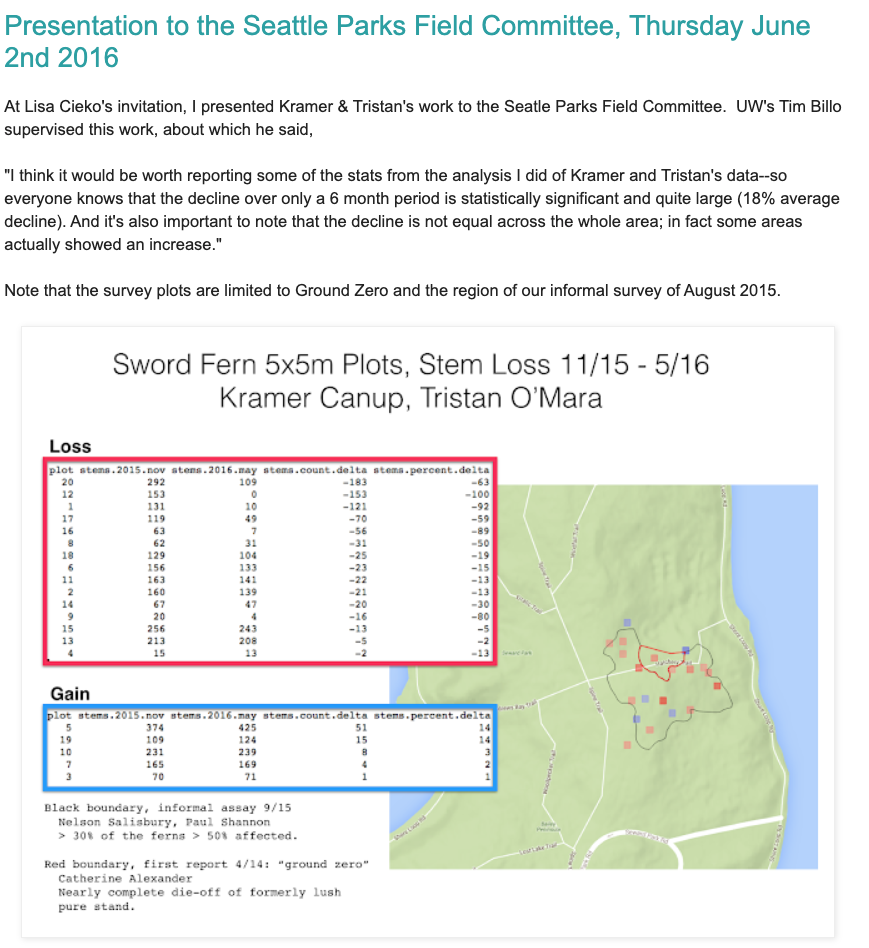
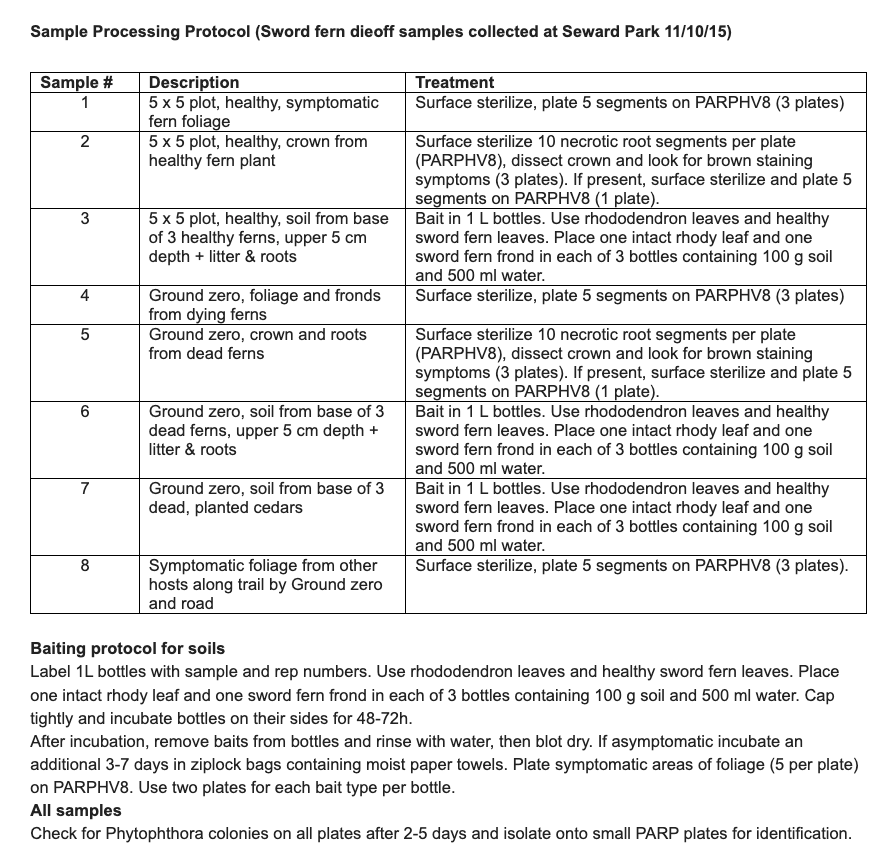
Accompanied by undergraduate students Tristan O'Mara, Kramer Canup and me, Marianne and Jenny spent a couple of hours inspecting the extended die-off site, and collecting soil and leaf samples from affected sites and a mostly healthy region (Kramer and Tristan's 5x5m "Plot 1").
Jenny describes herself as a lab generalist (a most expert generalist, it seems to me). Marianne is a research plant pathologist who, among other things, has coordinated (and is celebrated for) Washington's statewide response to Sudden Oak Death. She is active in phytophthora research. Though previous tests for Phytophthora came up negative (Jenny in 2014, Olaf Ribeiro in spring 2015) Marianne suggests that a closer and more sustained examination is worthwhile.
Lisa adds: one article that I found did say that this could be an issue -
Root Rot of Western Swordfern Caused by Phytophthora cinnamomi in California.
The abstract mentions that the "pathogen was inadvertently brought to the site via rhododendron nursery stock".
Thus we have a conjecture, a hypothesis, and the good fortune to also have experts both skilled and experienced to test it out. Their lab methods may also reveal other candidates, may suggest other hypotheses. We are very grateful to Marianne and Jenny!
Here I combine excerpts from multiple emails.
I understand your concern about the sword fern, given the stark pattern you are observing in your part of the world. I have never heard of a blight impacting species of Polystichum so unfortunately I have nothing to offer in the way of insights into what might be at the root of your dieback.If I had to guess, I would say that the individuals are probably very old, perhaps dating back to the time of original disturbance in the area. This seems likely given that there seems to be little or no sexual reproduction going on, and the mature sporophytes can persists by their perennial and bifurcating rhizomes.
I wonder whether age of an individual close could be extrapolated by trying to determine the size (diameter) of an individual clone and taking into account its annual growth rate. Something like this has been done for Osmunda regalis and Pteridium aquilinum, but I cannot remember the references off-hand. I think one study on Pteridum aquilinum was done by Park and Werth in 1993 near the Mt. Lake Biological Station in Virginia.
I very much like the idea that they are old individuals, established at a remote time when there was disturbance in the forest. Fire would create such a disturbance. As to age, 1000 years is not out of the question, possibly much longer but there are no data at all for deciding. There are very few sites for the establishment of new plants via gametophyte in the stable mature forests of the Northwest, though a single treefall would create such an opportunity. Polystichum munitum is essentially unbranched, which lends support to the idea that the populations are made up of independently originated individuals, not fragments of some giant clone.
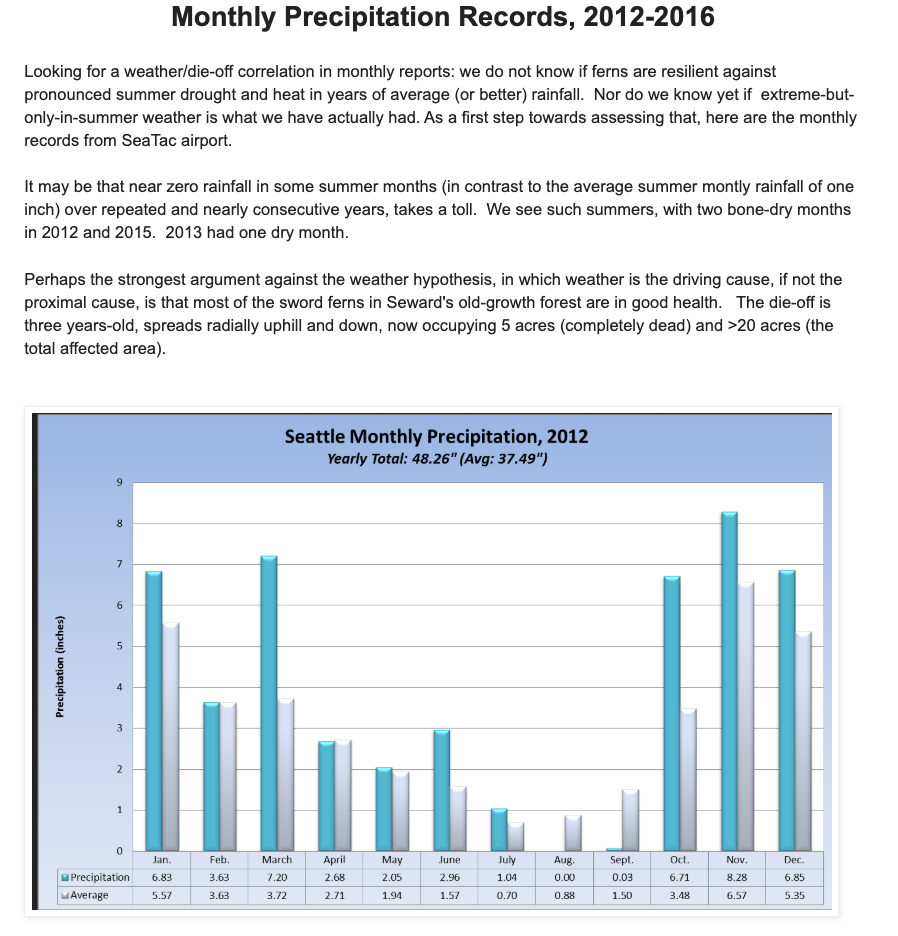
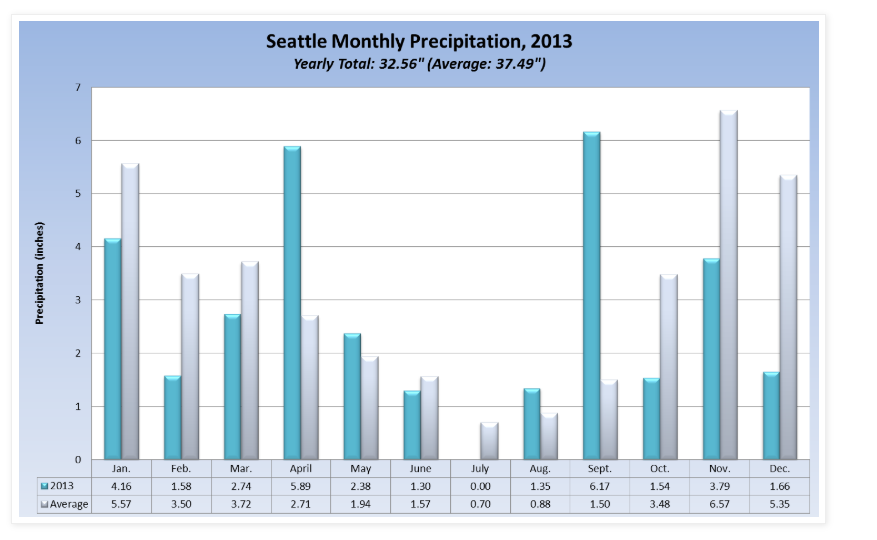
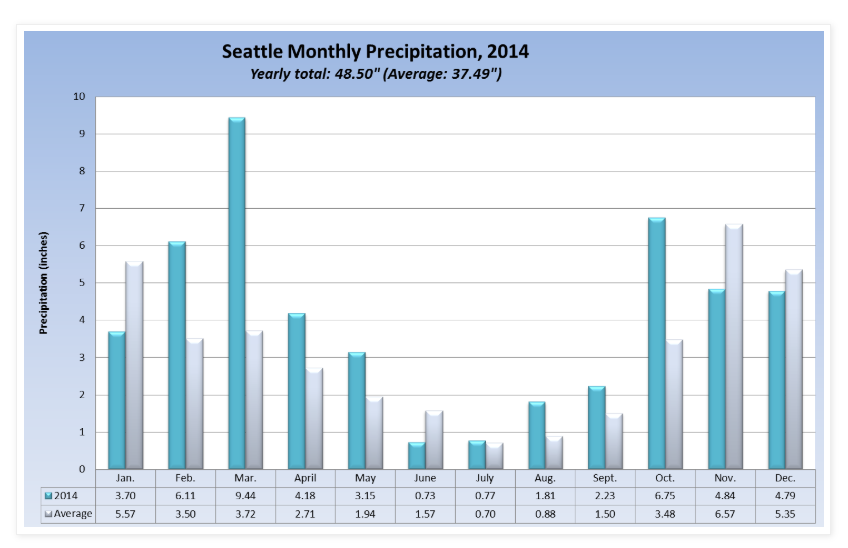
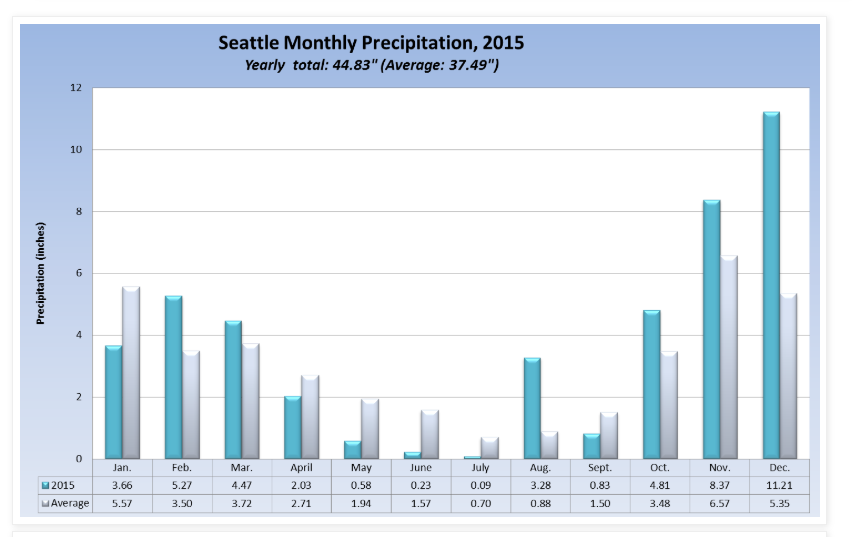
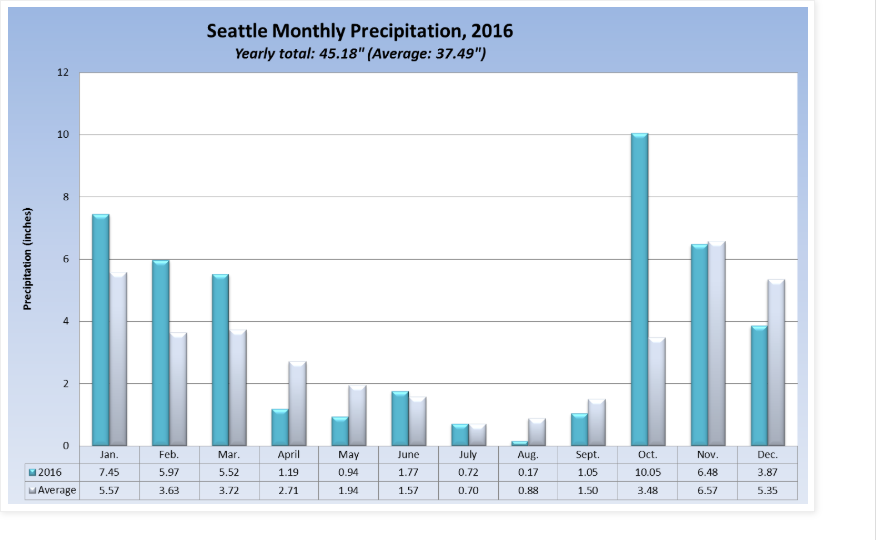
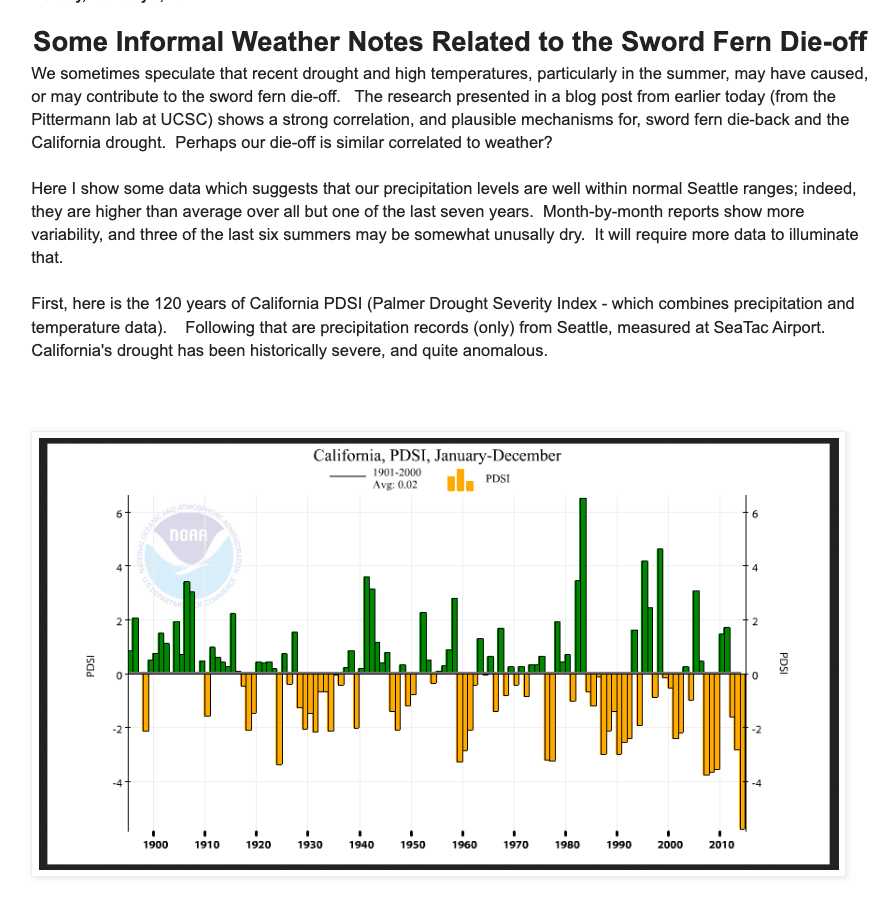
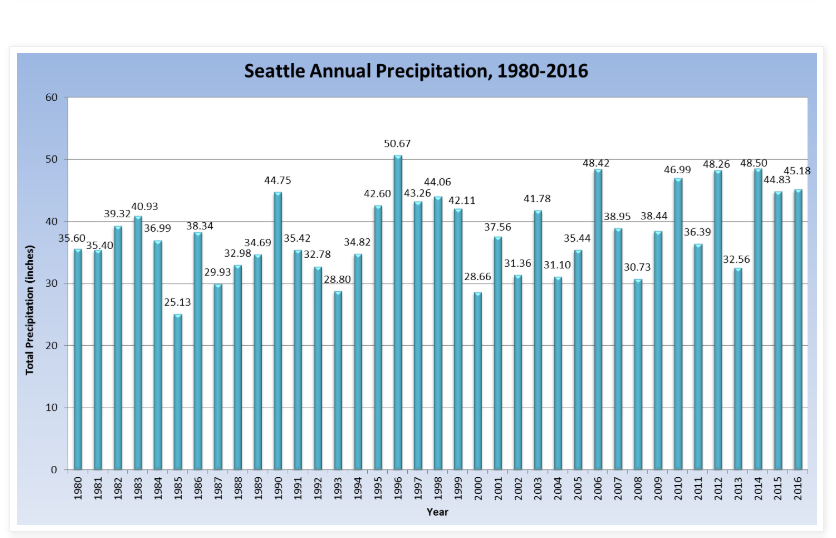
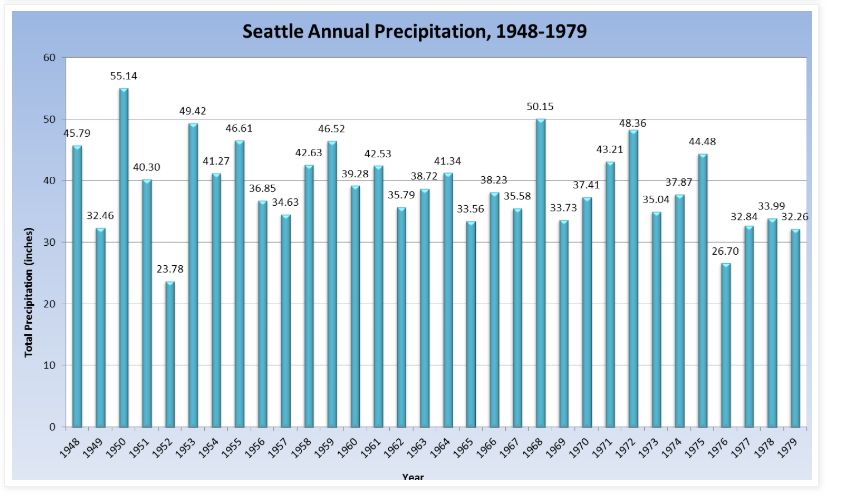
We suggest that the following multiple lines of evidence together conclusively establish that direct drought and temperature shifts are not the direct cause of the sword fern die-off.
Indirect climate effects may play a role, in which case the mechanisms and the intermediate processes need elucidation.
The first reports in the region of dramatic die-off are from 2010, on the Kitsap Peninsula. See Port Ludlow study, below. UW PhD atmospheric scientist Joe Zagrodnik looked for drought/die-off correlations and reported:
The period from 2007-2012 was generally characterized by near-normal temperatures and precipitation (2011 was a cool year). By all measures the current period anomalous weather started in 2013 and I can say confidently that anything happening prior to 2013 is not caused by unusually warm or dry weather patterns.
The ecophysiology analysis of ferns from healthy, intermediate and die-off areas in Seward park [show] that moisture stress is not a driver of physiological stress for Seward ferns.More detail from Caleb's final report:
For the ecophysiology analysis portion, our hypothesis was that plants in non-die off areas would have higher values for stomatal conductance, Fv/Fm, and possess a Ψ closer to the optimum for the species in question (or further from the turgor loss point for the local population) in comparison to plants in active die off areas. Three distinct areas of decline were established at Seward Park, die off, intermediate, and healthy.These areas were characterized with the help of Paul Shannon (Seward Park Steward) and Olga Kildisheva (Verdant Counseling, LLC) and sampled on August 19th, at the peak of the dry season. We used the following metrics to compare physiological stress of ferns in the die off, intermediate, and healthy treatment areas: dark-adapted fluorescence (Fv/Fm) to determine the efficiency of photosystem II, stomatal conductance (Gs) to ascertain whether or not ferns are closing their stomata during photosynthetically active periods, and xylem water potential (Ψ) to determine water status (Toivonen and Vidaver, 1988; Schreiber and Bilger, 1987; Corcuera and Notivol, 2015; Angelopoulos et al., 1996; Jordan and Ritchie, 1971).
Healthy tissue from ten ferns within each treatment group was analyzed for predawn and midday water potential and dark-adapted fluorescence. Stomatal conductance measurements were taken in between predawn and midday sampling. We found no significant differences between treatment groups in any of the metrics except midday water potential. The ferns from the die off treatment area had an average midday xylem water potential of -1.7574 MPa, versus -0.9074 MPa and -0.9474 MPa for the intermediate and healthy treatment groups respectively. This result is complicated by the fact that we ran out of compressed nitrogen during the midday water potential readings from the die off treatment area.
Samples were immediately transported from Seward Park to Reed college in a cooler so that water potential measurements could still be taken. Due to the unstandardized approach in xylem water potential analysis between the die off and the other treatment groups, we cannot be confident of the accuracy of this result. However, a pressure-volume curve was created from samples taken across the three treatment groups, which gave us a turgor loss point of -2.3 MPa for P. munitum at Seward Park.
Since the significant water potential result was well above this moisture stress-indicating threshold, we are confident in our conclusion that moisture stress is not driving the die off at Seward Park. This increases our confidence that the regional decline is caused by some still unknown biotic vector.
At Seward Park, and in the other regional die-off sites we monitor (ranging from near Quilcene on the Olympic Peninsula, to the Goldmeyer Hot Springs Road in the foothills of the Cascades) no other understory plants exhibit the die-off or decline symptoms we see in sword ferns. The die-off thus appears to be specific to P. munitum: no other fern species are affected, no other shrub or herbaceous species. It seems unlikely that the sword fern - famously robust and very long-lived ("1000 years is not out of the question" - David Barrington, University of Vermont, Polystichum genus expert) - that the sword fern alone would be affected by drought and temperature.
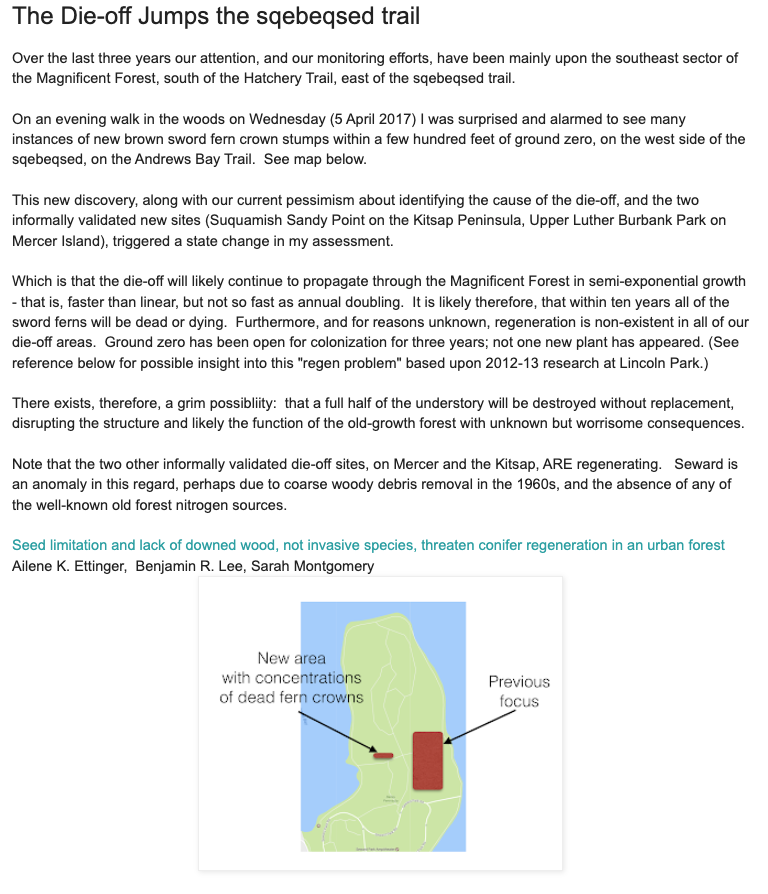
The die-off at Seward Park spreads in two ways: radially from heavily affected areas, and by leaps into distant previously unaffected areas. The radial spread includes movement uphill, jumping across trails after some delay, and downhill into presumably wetter soil. Large regions of low- and high-density fern populations are unaffected - within a short distance of affected areas. This distribution is hard to explain by drought effects. Pathogenicity, perhaps abetted by weather and climate, makes much more sense.
The trees in this area are unimpressive, mostly maples < 2' dbh, with incomplete canopy cover. By the end of the summer of 2024 some natural regeneration had taken place here - which is unusual at Seward, where large healthy trees predominate, many of them coniferous, with little open canopy. A casual inspection revealed no new sword ferns. Some nursery ferns planted (in 2018? by Verdant LLC) in straight SE-NW lines seem healthy.
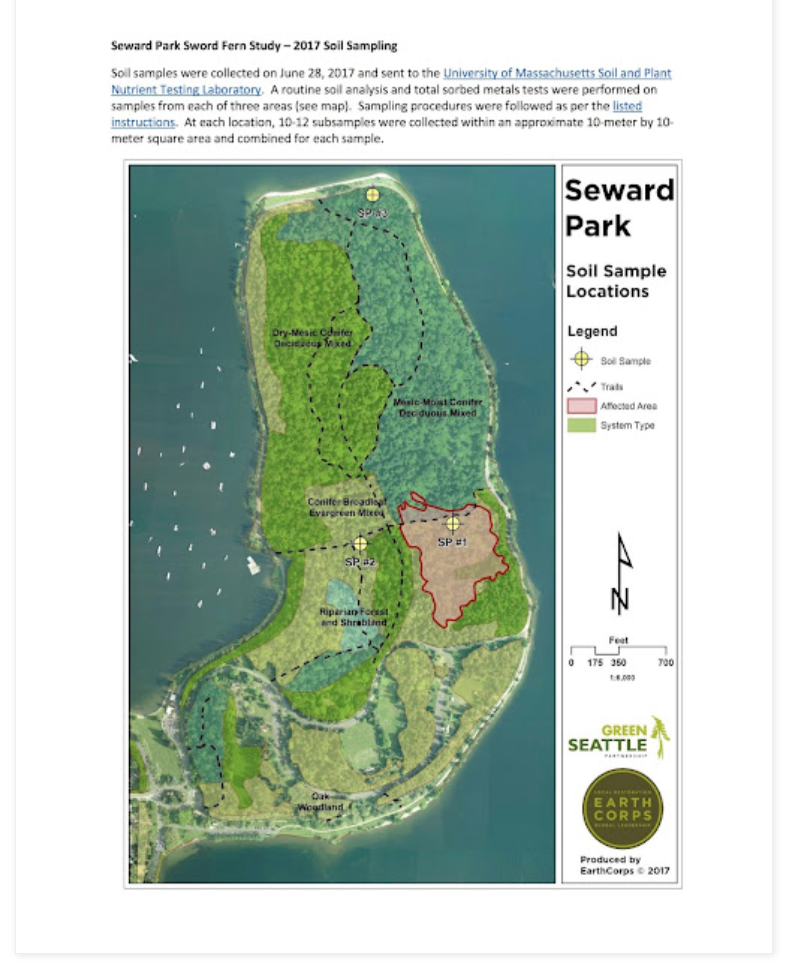
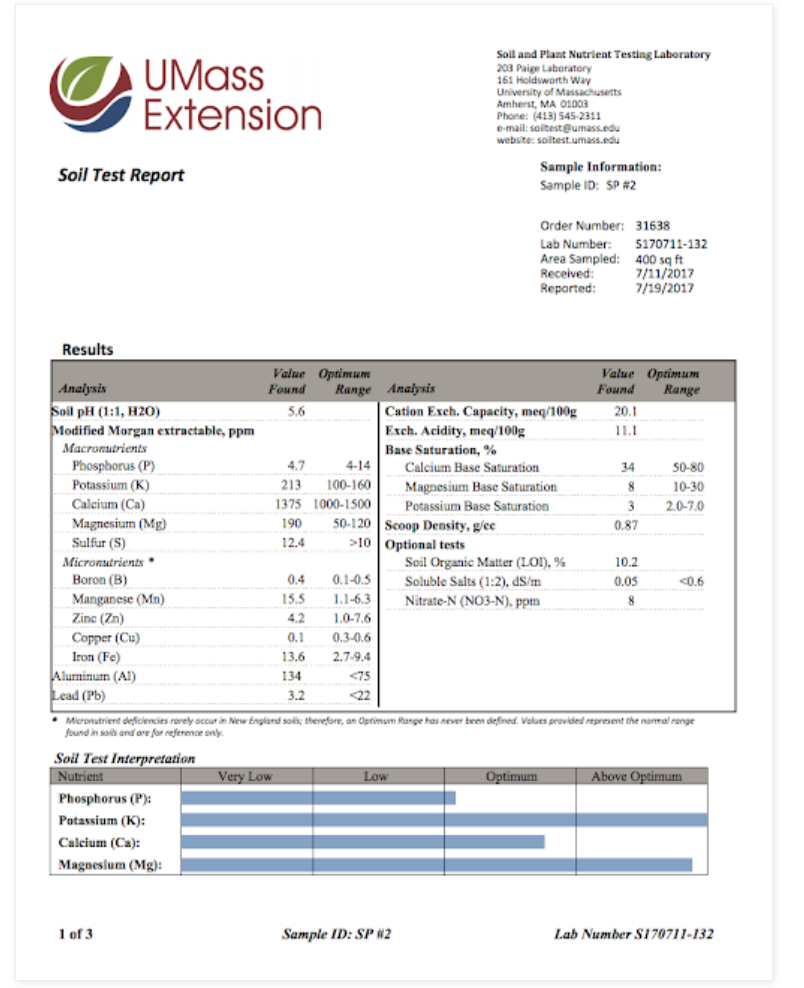
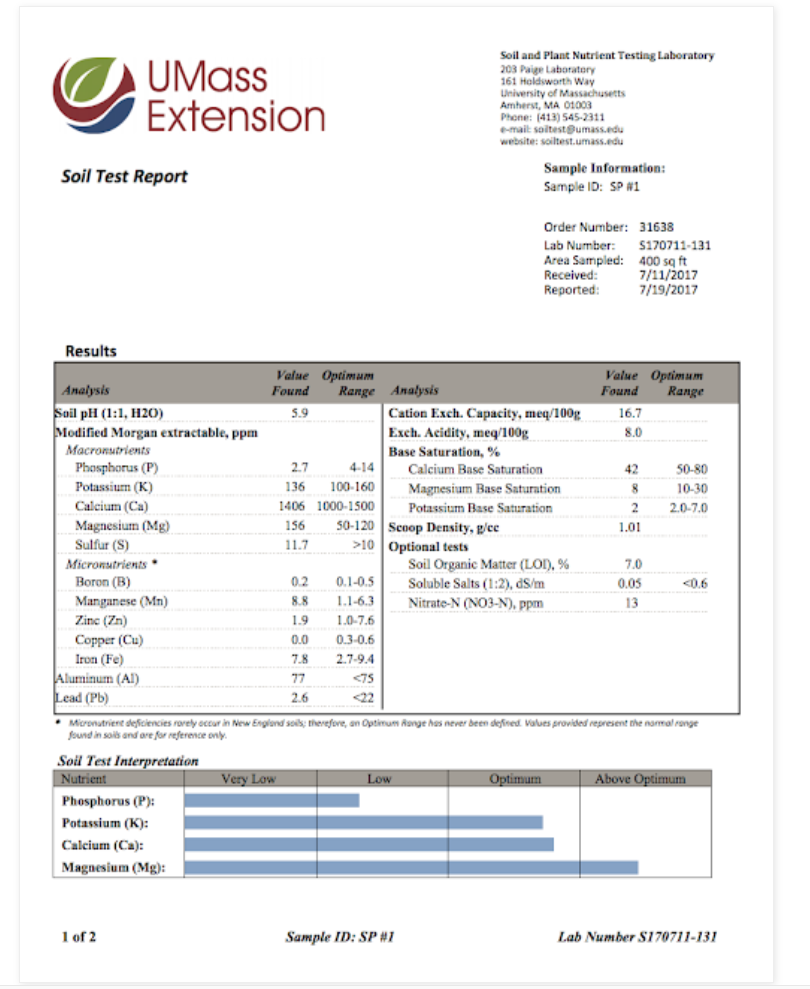
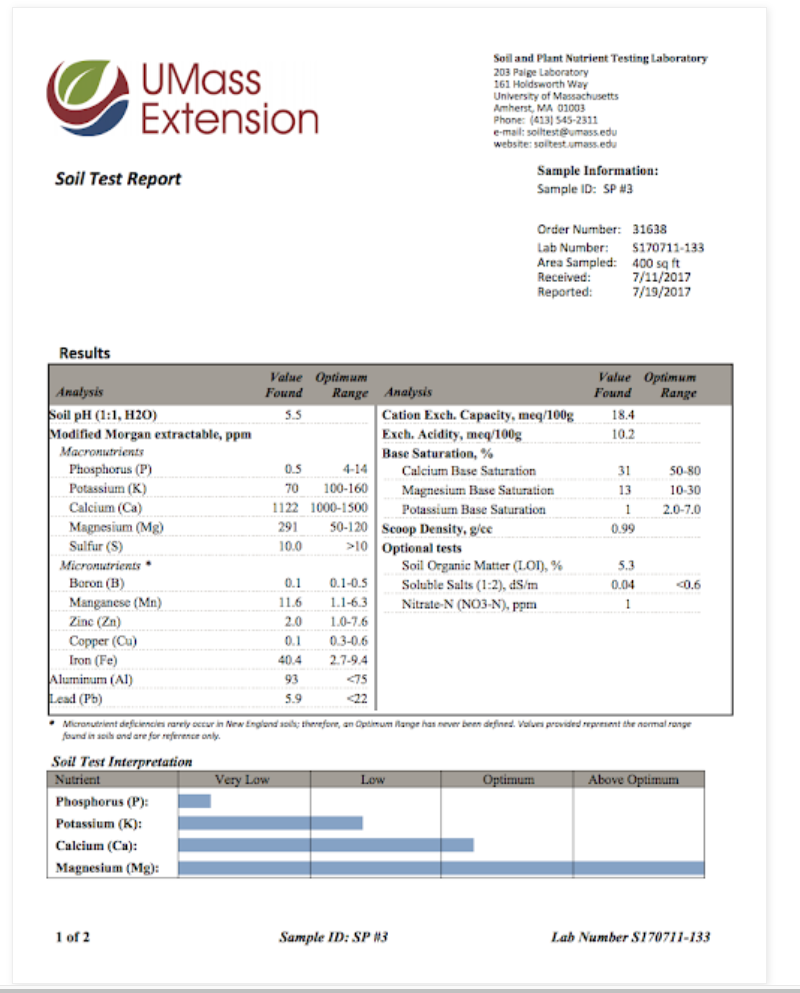
The subsequent testing cannot be characterized as high-grade multi-dimentional assays. The U Mass Soil Nutrient Lab serves primarily gardeners, perhaps some farmers.
Nothing useful came out of this small project.


Nonetheless, here is an early map.
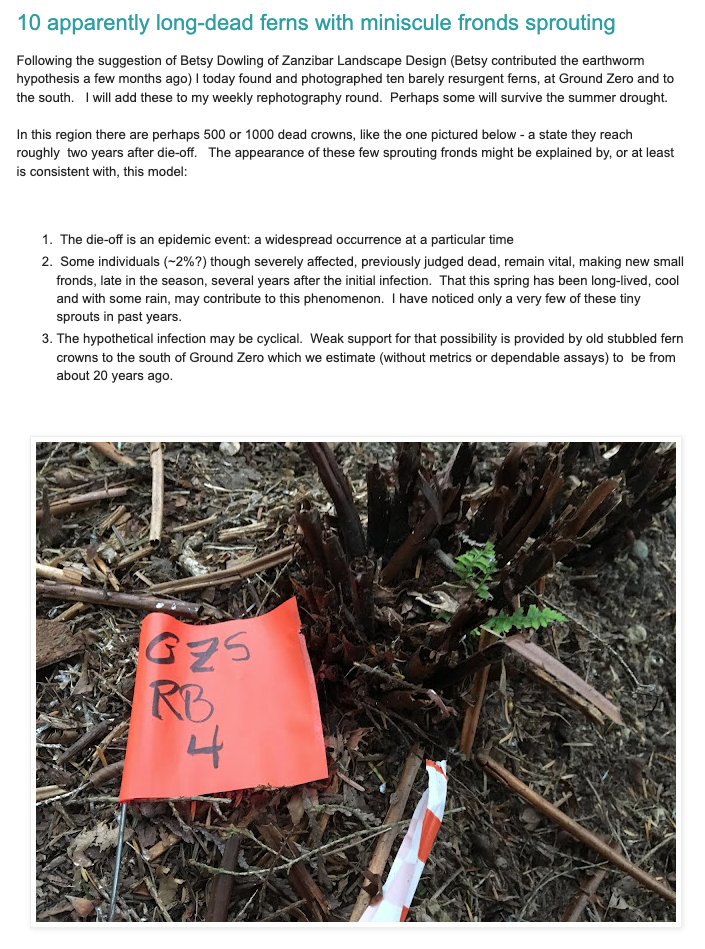
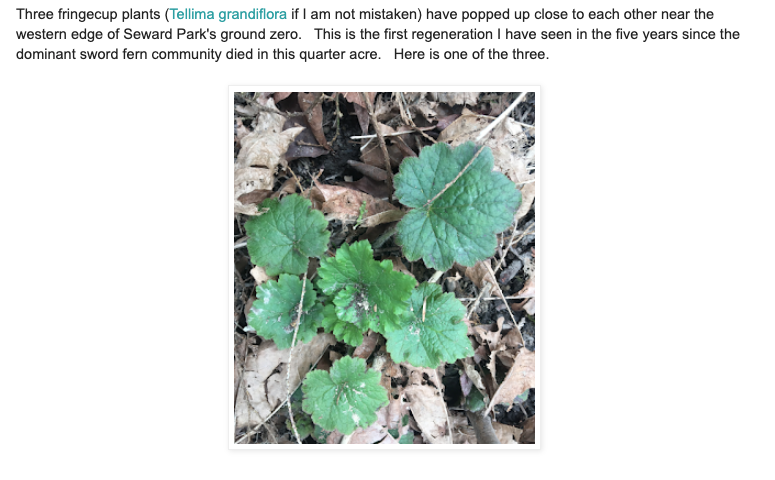
The die-off at Ground Zero had reached steady state by 2014, leaving almost entirely bare ground. 10% of the original ferns, as we assessed in a June 2019 study. This quarter acre was subject to erosion and likely undergoing further ecological degradation: underground mycorrhizal networks need photosynthesizing plants, of which there were very few. No natural restoration had taken place until a few fringecups - most happily - appeared in 2019.
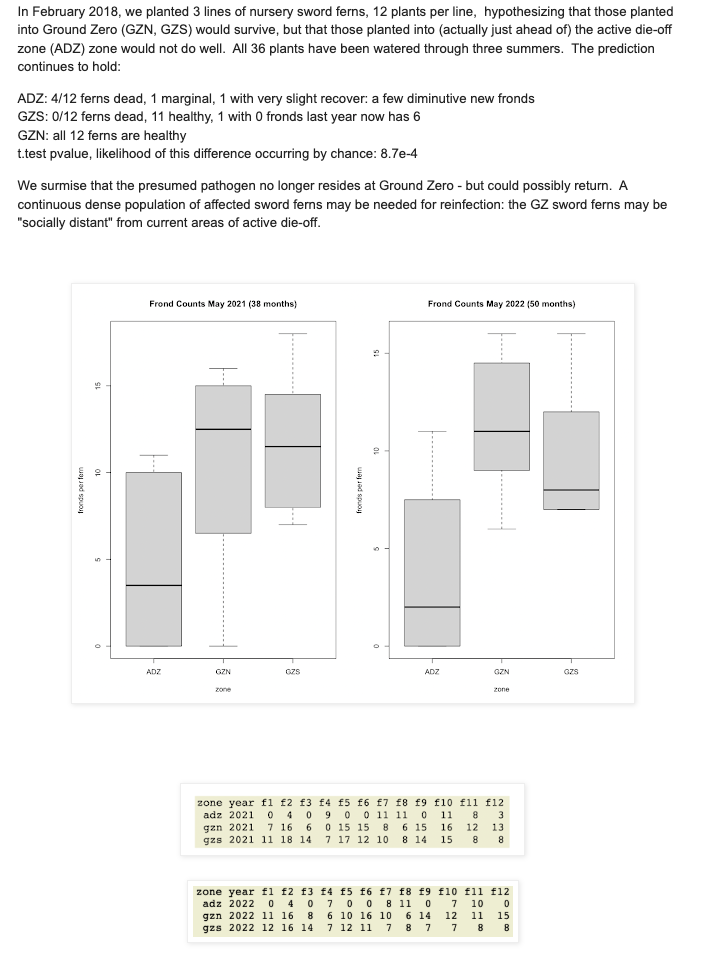
Suzanne and planted three lines of 12 ferns, two lines at Ground Zero, 1 line just north of what was then the boundary of the expanding die-off region. I hypothesized that the agent of the die-off, whatever it turns out to be, was no longer active at Ground Zero, but that it was likely to be active and virulent at the die-off's leading edge.
This hypothesis was a generalization from a single fern planted at Ground Zero in 2014. Inspecting the die-off with Seattle Parks plant ecologist Jillian Weed, I asked, "What should we do?". "Monitor closely", she said, "and why don't you plant a couple of nursery ferns?". We did, I watered the pair through a couple of summers, and one (dubbed "Jillian Weed #1") is thriving now six years later. A 50% survival rate for restoration planting is better than I usually achieve. So I surmised that the die-off agent/s were gone - at least temporarily.
I watered all 36 plants weekly during summer drought, two liters per plant, for three summers. The Ground Zero ferns (with one exception) are thriving. The northern line ("ADZ" for active die-off zone) is about 50% dead or dying. I have made every attempt to treat all three lines identically. By 2024, the one questionable ADZ fern has recovered, and is now in good health.
In April, Bonnie Drew, Jeff Kelley and I twice independently surveyed all three lines. We counted fiddleheads, interpreting them as simple markers of overall plant health. Here are the results, summarized for each of the three 12-fern lines, in box plot form. The full dataset is available on request.
I provisionally conclude that there is currently no active agent affecting ferns at Ground Zero. The degraded site is now recovering, which is very fine to see. The agent may return.
All 24 GZ ferns are in good health, producing new fronds each year.
From: Ellen Theisen and Ken Thompson
We are writing to you in the hopes that you have discovered a remedy for the sword fern die-off, and to share with you some information about our experience and experiments, since we were the first to report the die-off to Jenny Glass and Olaf Ribeiro.
We recently found your blog about the Seward Park sword fern die-off. For 10 years, we have been concerned about the die-off on and around our property, but until now, we didn't know of any others who shared our concern.
1990. The 2.5 acres of our land in Port Ludlow were covered with huge, gorgeous sword ferns, reaching up to nearly six feet high. The 160-acre forest surrounding us was also covered with big, healthy ferns.
2008. We began to notice that the ferns were dying in three or four areas of our property. Within a few years, an entire quarter acre held only dead fern root balls, and no weeds at all, with half an acre more showing severe damage.
July 2013. The die-off had continued to grow with many ferns dying or looking unhealthy. We cleared out a forest of blackberries and salmonberries and discovered another quarter-acre of die-off we had not seen before.
August 2013. We sent samples of some dead and dying fronds, along with a document of many annotated photos, to Jenny Glass and Marianne Powell at the WSU extension, asking for a diagnosis. They responded that the cause was unknown, and that neither they nor other plant specialists at WSU had heard of any similar problem elsewhere.
April 2014. We contacted Olaf Ribeiro. He examined the ferns, and took soil samples to analyze. He found evidence of a spider-mite infestation, but he said that he had not seen this sword fern die-off anywhere else. We cleared up the spider mites by spraying with CG-Mite.
May 2014. We applied organic products that strengthen roots and kill fungus to the soil around approximately 1000 healthy, dying, and dead ferns.
April 2015. We repeated the application. We also transplanted 34 ferns into a 1000 square-foot die-off area, and they are still alive and doing fairly well.
2017. We transplanted 8 ferns into another 400-square-foot area, and they have grown fiddlebacks this spring, and most of them look healthy.
Current. We have seen signs of improvement. Ferns are even beginning to grow in the first die-back area we observed. However, an occasional fern still dies or looks unhealthy, and the 160-acre forest surrounding us is showing signs of severe die off. The 10 acres we have walked through are full of dead and dying ferns.
If you find any solution to the die-off, please let us know as soon as possible. We will, of course, be watching your blog and would be happy to send you any of our documentation.
I would rather make a "guess" based on actual/live inspection of the problem, but if I have to make a guess from pictures, I will guess a fungal or bacterial pathogen. This is because of the apparent pattern/distribution of the dead plants.
The die-off appears to be occurring in isolated spots but expanding. Not sure if it occurring “away” from the walking pathways. This needs to be determined because it may provide evidence of the disease origin.
Non symptomatic plants were showing foliar damage typical of an herbivore such as thrips. Many leaves showed discolorations and leaf spots.
Symptomatic plants consisted of total necrosis. What appears to be early symptoms begins with death of the lower leaves. This advances until the whole plant is death. This “apparent early symptom” may rule out a root pathogen.
The putative pathogen appears to be dispersing aerially.
I suggest attempts to isolate a pathogen from plants showing early symptoms of die-off. Transplanting heathy plants near disease plants and monitoring them is a good idea.
Examinations of ferns near Lake Crescent (Olympic National Park) yielded some herbivore damage, foliar discolorations and some leaf spots. However I did not see any ferns with die-off symptoms.
The full report is available here
(Note: this study, and the subsequent Doty project, were both commissioned by Seattle Parks at a time when Parks staff were committed to the drought hypothesis. For reasons stated above - see section titled "2017 February - the drought/climate change Hypotheses" - heavy skepticism is warranted. See especially Haven Ecology's report, below, in the section titled )
This informal experiment suggests that the agent/s are mobile in water, and will affect healthy fronds sharing water with a diseased frond, especially when the diseased fond is at the "crinkly phenotype" stage (which may be the earliest stage of the presumed infection).
Be warned! This experiment is exceedingly preliminary, undoubtedly naive, suffers from small sample sizes, has not been replicated, and includes no quantitative data nor microbe-scale assays. They have been carried out by an untrained enthusiast.
The relevant section starts at 11 minutes, 10 seconds.
Read the story from the Pacific NW Magazine - which may now be behind a paywall.
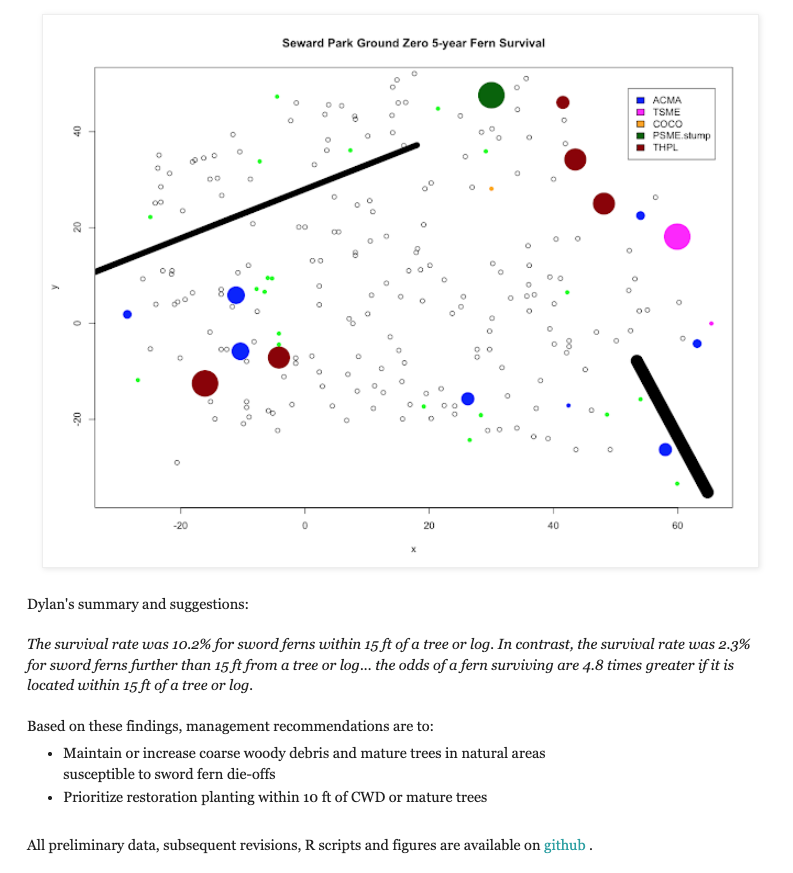
Is there a pattern to that survival, perhaps some clue to the cause of the die-off?
It appears that proximity to trees or logs correlates with survival - but does that stand up to close inspection? We found that there is a small but statistically significant association.
In this map dead ferns are black circles, survivors are in light green, trees are larger solid circles, and logs are thick black lines.
Leo Shannon and I collected the location and status of all ferns, trees and logs in this quarter acre on May 18th and 19th, 2019. Dylan Mendenhall did the analysis. Results are summarized below the map.
Since April 15 of this year, I have been monitoring 9 sword ferns in an active die off area at Seward Park. The purpose of the monitoring is to document the progression of the die of by tracking changes in ferns as they die. It is hoped that a set of definitive symptoms will be found that can help identify die off sites.
Already there are some observations which, taken together, seem to be a significant symptom of the Seward die off syndrome:
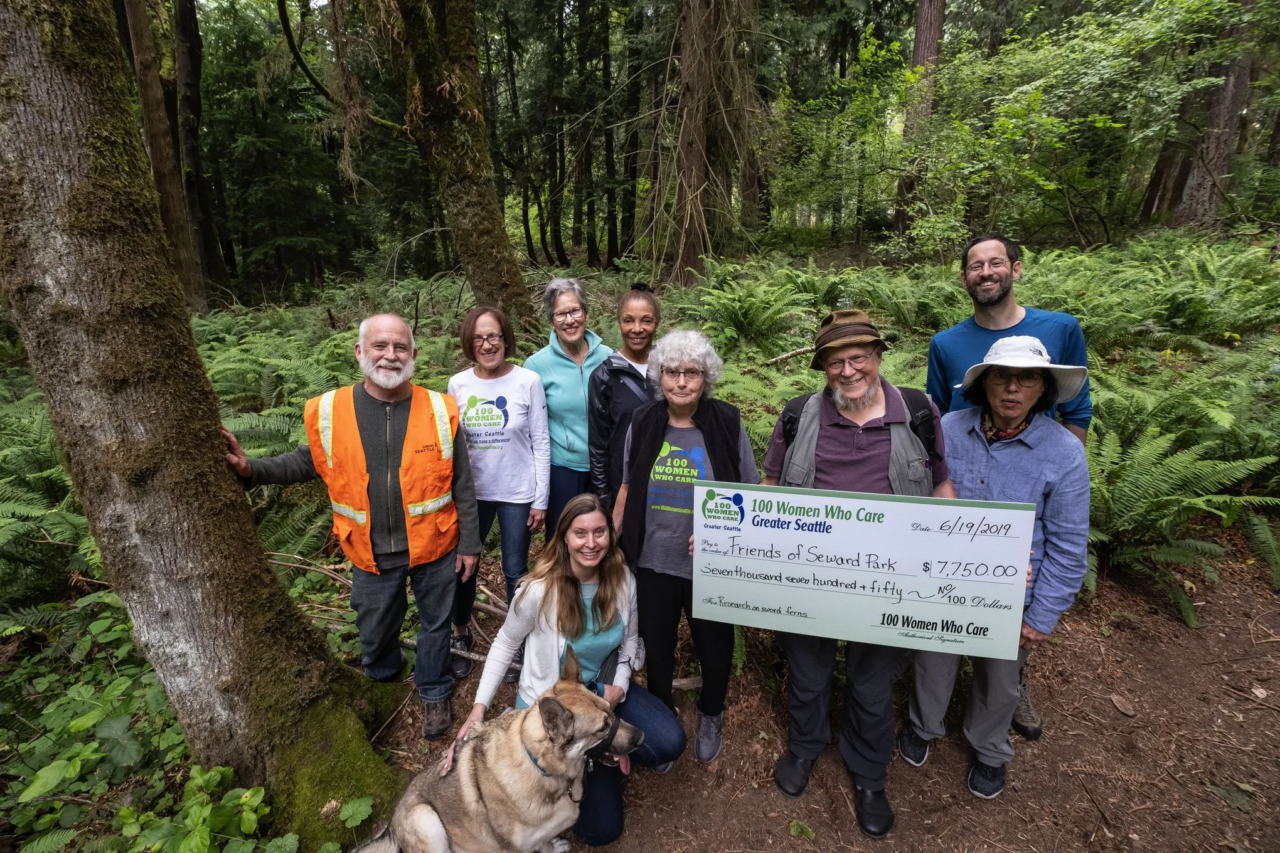
We used this generous donation to hire Dylan Mendenhall to carry out greenhouse transmission experiments and endophyte DNA sequencing.
See these projects described below:
November 2, 2019
Abstract
The regional decline of sword ferns (Polystichum munitum) in the Puget Sound lowlands remains unexplained. However, anecdotal observations and some preliminary evidence from a pilot study suggest that a transmissible pathogen may be driving the phenomenon. We used sword fern fronds as a bioassay in a paired-sample greenhouse experiment to determine if symptoms could be transmitted from symptomatic fronds to healthy fronds with water as a shared medium. After 5 days, fronds in the infected treatment group were significantly more desiccated and had significantly lower foliar moisture content than fronds in the control group which were grown in water with apparently healthy fronds. We were not able to identify whether the causal agent was transmitted through physical contact, an aboveground vector or through the water. Nonetheless, our results suggest that a vascular pathogen is present in the foliage of sword ferns located at the edge of an active die-off site in Seward Park
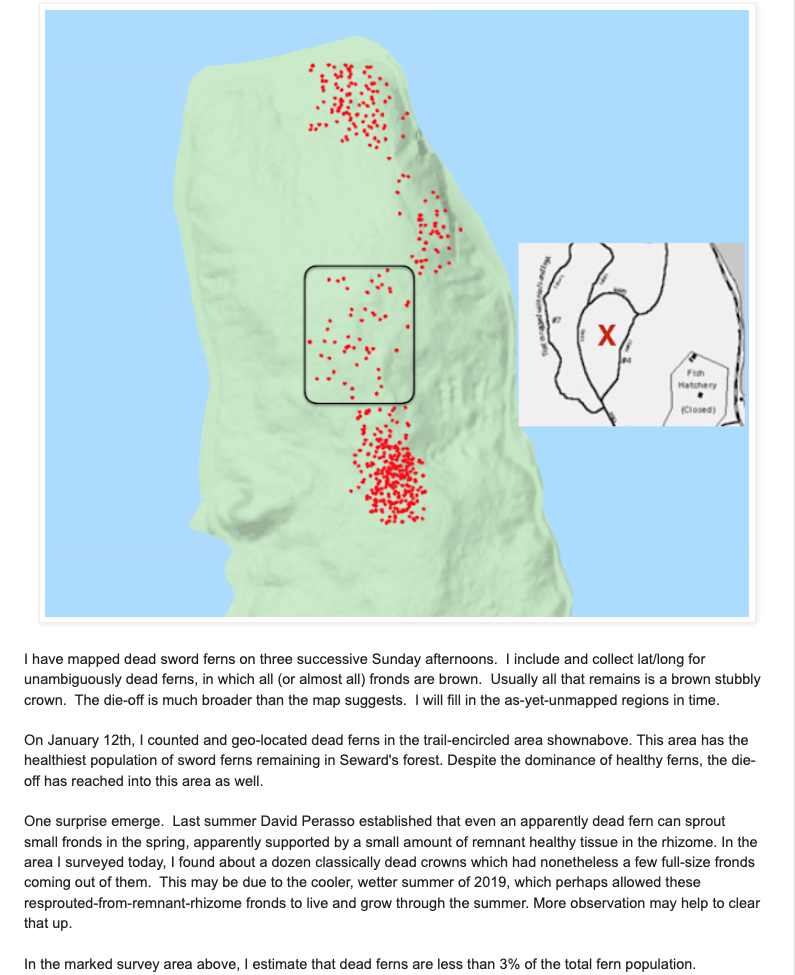
I was initially motivated by my observation that in the bounded 5-acre region in the middle of the map, fern die-off had not yet progressed as much as I had seen both south and north of that central region. This appears to have been borne out.
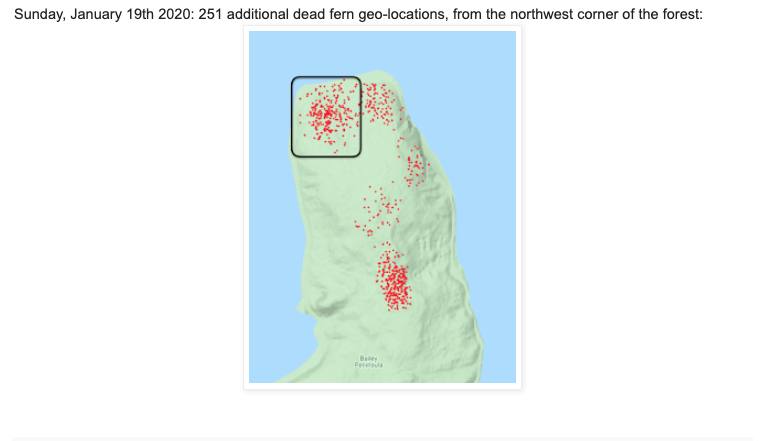
I traversed sections of the forest, collecting a GPS location on every dead fern crown I encountered.
See section below 2020 October - Die-off hits an old pure stand of ferns, one of the last unaffected which finding confirms that this bounded section, at that point, had markedly less die-off, but now has considerably more.
The northern end of the bounded region still shows less than typical die-off.
In the last decade, there has been a rapid decline of western sword fern (Polystichum munitum) throughout the Puget Sound region. Preliminary data suggested an infectious agent as the cause, however, results were not definitive. We propose to use molecular and microbiological approaches to determine the probable cause of the mortality. Phase 1 objectives are to verify that inoculum from affected plants causes decline of healthy fern, and subsequently, to analyze the inoculum using PCR, sequencing, microscopy, and microbiological screening techniques to determine the pathogen identity. For a subsequent Phase 2 grant, we will propose to use plant microbial mutualists for biocontrol and increased resilience of western sword fern plants. Our current suite of microbial strains with strong activity against Rhizoctonia and other fungal pathogens will be tested for activity against the fern pathogen. The ability of the biocontrol strains to colonize and persist in fern will be ascertained. In parallel, the microbiota of fern naturally surviving in the decline zones will be screened for activity, purified, and identified. The overall aim of the full project is to provide a natural protective inoculum for use in restoration of western sword fern.
FoSP expressed reservations about the conduct, content and conclusions of this report. Our concerns included:
Sword ferns (Polystichum munitum) are rapidly declining in Seward Park, one of the few remnant old growth forests in the Puget Sound lowlands. Based on recent transmission experiments, we hypothesize that a pathogen may be responsible for the phenomenon. We also consider drought stress as an alternative explanation. We compared areas of Seward Park containing symptomatic sword ferns with areas of Seward Park and Schmitz Preserve Park containing healthy ferns. In each experimental group, we surveyed the soils, site conditions and plant communities. We also collected tissue samples from sword ferns to measure their foliar moisture content and to evaluate the microbial endophyte community using the Illumina MiSeq platform.
Foliar moisture content was significantly lower in symptomatic sword ferns compared with healthy ferns. However, foliar moisture content was not correlated with soil moisture content, which was similar between all three experimental groups. Soil bulk density was also similar between the symptomatic and healthy areas of Seward Park. Widespread mortality was not observed among sword ferns in Schmitz Preserve Park, where the soils are more coarsely textured and better draining than in Seward Park. Although the microbiome component of our study is ongoing, these preliminary results do not support the drought hypothesis.
The sword fern decline is likely driven by a process that is independent from the site conditions that influence soil moisture content.
Lekberg and Dupre's final report is available here.
However, foliar moisture content was not correlated with soil moisture content, which was similar between all three experimental groups. Soil bulk density was also similar between the symptomatic and healthy areas of Seward Park. Widespread mortality was not observed among sword ferns in Schmitz Preserve Park, where the soils are more coarsely textured than in Seward Park. Although the microbiome component of our study is ongoing, our preliminary results remain consistent with the pathogen hypothesis. Our findings suggest that the sword fern decline is driven by a process independent of drought stress or the site conditions that influence soil moisture content.
But please do follow the link, then take a look at the time-lapse video of the current most virulent die-off site.
FoSP will soon place this poster into one or more of the Seward Park kiosks.
The QR code points to this website.
Brett Younginger has the only published P.munitum endophyte sequencing we have identified. Fungi were his exclusive focus. Interestingly, and probably relevant to any study we do, he reports in two successive papers that
METHODS: Utilizing next-generation sequencing, we sampled pinnae from P. munitum in spring, 2–3 d after they emerged. We additionally sampled pinnae 30 d later from the same fern blades. From these samples, we sequenced fungal DNA to characterize the initial colonization and temporal turnover of endophytes in the host.
KEY RESULTS: We demonstrate that P. munitum is abundantly colonized by endophytes in newly emerged foliar tissue. However, 1 mo later, the community composition undergoes a marked shift: the overall richness of endophytes increases, but the evenness of the community wanes as a single taxon, Flagellospora fusarioides , comes to dominate.
CONCLUSIONS: We conclude that P. munitum hosts a variety of fungal endophyte taxa, similarly to other land plants. However, the rapid shift of the endophyte community we report is an unprecedented observation. Therefore, we further conclude that repeated sampling should be the standard in endophyte studies, because single sampling events are not sufficient to capture the dynamic nature of these cryptic microfungi.
KEY WORDS culture-independent; Dryopteridaceae; fern microbiota; Flagellospora fusarioides ; microbial community ecology; microbiome; Nectriaceae; Pacifi c Northwest; plant–microbe interactions; western sword fern
Last week we sent them two additional ferns, one sick, one healthy, for a closer inspection.
These good scientists have earned our gratitude. Generous donations to FoSP paid the not inconsiderable bill for overnight shipping.
We selected eleven photos from 664 photos contributed by 409 visitors, and learned that symptoms of the die-off appear - in at least this one instance - in June and July.